JK POST IN DISCORD - re: Sperm Whale Birth
BACK TO EPISTOMOLOGY
Epistemology (ih-pis-tuh-MAH-luh-jee) is a big word that basically means “==thinking about thinking==” or “how do we know what we know?”
It is a branch of philosophy, which is the study of big questions about life. Epistemology doesn’t ask “Is the sky blue?” Instead, it asks: “How do you know the sky is blue?”
Here is how to break it down:
- What is Knowledge? Imagine you say, “I know there is a monster under my bed.”
- Is that really knowledge?
- Or is it just a belief?
- Epistemology helps us figure out the difference between guessing and truly knowing something.
- How Do We Get Knowledge? We get information in different ways, and epistemology investigates which ways are trustworthy. So “I know there is a monster under my bed”—HOW can you know if you know or if it’s a belief.:
- Using our senses: You can LOOK (know the stove is hot because you felt it (or saw it was on).)
- Using logic/reasoning: You can REASON - If monsters are real, surely there would be documented proof of their under-the-bed existence by now. There is no documented evidence, therefore it’s logical to know they aren’t real (know that just by thinking about it in your head.)
- Testimony (Others): Everyone I know and trust TELLS me Monsters aren’t real, plus no trustworthy, well-researched books claim to have proof they’re real either… (You know Paris is in France because a teacher or book told you.)
- The “Why” Questions (Justification) Epistemologists (the people who study this) want to know if you have good reasons for what you believe.
- If you say, “It is raining,” can you show me a wet umbrella? That’s asking for justification.
- If you say, “I believe it’s going to rain because my knee itches,” that is probably not strong evidence (not justification).
- Why Does It Matter? Epistemology helps us be careful thinkers so we don’t believe everything we hear. It helps us:
- Distinguish between real news and fake news.
- Understand how science works (experiments and proof).
- Decide if we can trust what we see in movies or video games.
In short: Epistemology is being a detective for your own brain, asking “Are you sure about that?” and “How can you prove it?”.
b/c to Ishmael, philosophy is personal therapy (next week Spinoza vs Plato)
| Locke (1632-1704) | Kant (1724-1804) |
|---|---|
| Blank Slate (Tabula Rasa) | “transcendental idealist” |
| We learn through experience | experiences, yes BUT mind uses a priori concepts to organize new (experiential) infornation |
| Sensation/senses | Mind’s active role |
- 1849-50 Melville Toured England Germany France and talked a LOTTA philosophy with a lotta experts.
- Gamboge - do paint demo with all Gamboges you can find- semi-transparent deep saffron to mustard yellow pigment
- George Walker “Three Spaniards” 1800s publication - CODE FOR A COCK & BULL STORY
- Beelzebub (see ch 50)
- Trimming boat (vs trimming sails)
POST They’re only supposed to get Sperm Whales - why go after a Right Whale? - to balance the ship while they work.
HOLY CRAP - whale going UNDER the Pequod!
OAKUM to stuff in his boots (b/c hooves HA!)
- Laplandish - Supernatural/Sami
| right whale | sperm whale |
|---|---|
| Labord | starboard |
Stubb says Soul = Silver watch (not even GOLD)
BLAST HIM was D___n Him in British version
EPISTEMOLOGY
END WITH PYTHON SONG
Contents
CHAPTER 73. Stubb and Flask kill a Right Whale; and Then Have a Talk over Him.
CHAPTER 73. Stubb and Flask kill a Right Whale; and Then Have a Talk over Him.
It must be borne in mind that all this time we have a Sperm Whale’s prodigious head hanging to the Pequod’s side. But we must let it continue hanging there a while till we can get a chance to attend to it. For the present other matters press, and the best we can do now for the head, is to pray heaven the tackles may hold.
Now, during the past night and forenoon, the Pequod had gradually drifted into a sea, which, by its occasional patches of yellow brit,1 gave unusual tokens of the vicinity of Right Whales, a species of the Leviathan that but few supposed to be at this particular time lurking anywhere near. And though all hands commonly disdained the capture of those inferior creatures; and though the Pequod was not commissioned to cruise for them at all, and though she had passed numbers of them near the Crozetts without lowering a boat; yet now that a Sperm Whale had been brought alongside and beheaded, to the surprise of all, the announcement was made that a Right Whale should be captured that day, if opportunity offered.
Nor was this long wanting. Tall spouts were seen to leeward; and two boats, Stubb’s and Flask’s, were detached in pursuit. Pulling further and further away, they at last became almost invisible to the men at the mast-head. But suddenly in the distance, they saw a great heap of tumultuous white water, and soon after news came from aloft that one or both the boats must be fast. An interval passed and the boats were in plain sight, in the act of being dragged right towards the ship by the towing whale. So close did the monster come to the hull, that at first it seemed as if he meant it malice; but suddenly going down in a maelstrom, within three rods2 of the planks, he wholly disappeared from view, as if diving under the keel. “Cut, cut!” was the cry from the ship to the boats, which, for one instant, seemed on the point of being brought with a deadly dash against the vessel’s side. But having plenty of line yet in the tubs, and the whale not sounding very rapidly, they paid out abundance of rope, and at the same time pulled with all their might so as to get ahead of the ship. For a few minutes the struggle was intensely critical; for while they still slacked out the tightened line in one direction, and still plied their oars in another, the contending strain threatened to take them under. But it was only a few feet advance they sought to gain. And they stuck to it till they did gain it; when instantly, a swift tremor was felt running like lightning along the keel, as the strained line, scraping beneath the ship, suddenly rose to view under her bows, snapping and quivering; and so flinging off its drippings, that the drops fell like bits of broken glass on the water, while the whale beyond also rose to sight, and once more the boats were free to fly. But the fagged whale abated his speed, and blindly altering his course, went round the stern of the ship towing the two boats after him, so that they performed a complete circuit.
Meantime, they hauled more and more upon their lines, till close flanking him on both sides, Stubb answered Flask with lance for lance; and thus round and round the Pequod the battle went, while the multitudes of sharks that had before swum round the Sperm Whale’s body, rushed to the fresh blood that was spilled, thirstily drinking at every new gash, as the eager Israelites3 did at the new bursting fountains that poured from the smitten rock.
At last his spout grew thick, and with a frightful roll and vomit, he turned upon his back a corpse.
While the two headsmen were engaged in making fast cords to his flukes, and in other ways getting the mass in readiness for towing, some conversation ensued between them.
“I wonder what the old man wants with this lump of foul lard,” said Stubb, not without some disgust at the thought of having to do with so ignoble a leviathan.
“Wants with it?” said Flask, coiling some spare line in the boat’s bow, “did you never hear that the ship which but once has a Sperm Whale’s head hoisted on her starboard side, and at the same time a Right Whale’s on the larboard; did you never hear, Stubb, that that ship can never afterwards capsize?”
“Why not?
“I don’t know, but I heard that gamboge ghost of a Fedallah saying so, and he seems to know all about ships’ charms. But I sometimes think he’ll charm the ship to no good at last. I don’t half like that chap, Stubb. Did you ever notice how that tusk of his is a sort of carved into a snake’s head, Stubb?”
“Sink him! I never look at him at all; but if ever I get a chance of a dark night, and he standing hard by the bulwarks, and no one by; look down there, Flask”—pointing into the sea with a peculiar motion of both hands—“Aye, will I! Flask, I take that Fedallah to be the devil in disguise. Do you believe that cock and bull story about his having been stowed away on board ship? He’s the devil, I say. The reason why you don’t see his tail, is because he tucks it up out of sight; he carries it coiled away in his pocket, I guess. Blast him! now that I think of it, he’s always wanting oakum4 to stuff into the toes of his boots.”
“He sleeps in his boots, don’t he? He hasn’t got any hammock; but I’ve seen him lay of nights in a coil of rigging.”
“No doubt, and it’s because of his cursed tail; he coils it down, do ye see, in the eye of the rigging.”
“What’s the old man have so much to do with him for?”
“Striking up a swap or a bargain,5 I suppose.”
“Bargain?—about what?”
“Why, do ye see, the old man is hard bent after that White Whale, and the devil there is trying to come round him, and get him to swap away his silver watch, or his soul, or something of that sort, and then he’ll surrender Moby Dick.”
“Pooh! Stubb, you are skylarking; how can Fedallah do that?”
“I don’t know, Flask, but the devil is a curious chap, and a wicked one, I tell ye. Why, they say as how he went a sauntering into the old flag-ship once, switching his tail about devilish easy and gentlemanlike, and inquiring if the old governor6 was at home. Well, he was at home, and asked the devil what he wanted. The devil, switching his hoofs, up and says, ‘I want John.’ ‘What for?’ says the old governor. ‘What business is that of yours,’ says the devil, getting mad,—‘I want to use him.’ ‘Take him,’ says the governor—and by the Lord, Flask, if the devil didn’t give John the Asiatic cholera7 before he got through with him, I’ll eat this whale in one mouthful. But look sharp—ain’t you all ready there? Well, then, pull ahead, and let’s get the whale alongside.”
“I think I remember some such story as you were telling,” said Flask, when at last the two boats were slowly advancing with their burden towards the ship, “but I can’t remember where.”
“Three Spaniards?8 Adventures of those three bloody-minded soldadoes? Did ye read it there, Flask? I guess ye did?”
“No: never saw such a book; heard of it, though. But now, tell me, Stubb, do you suppose that that devil you was speaking of just now, was the same you say is now on board the Pequod?”
“Am I the same man that helped kill this whale? Doesn’t the devil live for ever; who ever heard that the devil was dead? Did you ever see any parson a wearing mourning for the devil? And if the devil has a latch-key to get into the admiral’s cabin, don’t you suppose he can crawl into a porthole? Tell me that, Mr. Flask?”
“How old do you suppose Fedallah is, Stubb?”
“Do you see that mainmast there?” pointing to the ship; “well, that’s the figure one; now take all the hoops in the Pequod’s hold,9 and string along in a row with that mast, for oughts,10 do you see; well, that wouldn’t begin to be Fedallah’s age. Nor all the coopers in creation couldn’t show hoops enough to make oughts enough.”
“But see here, Stubb, I thought you a little boasted just now, that you meant to give Fedallah a sea-toss, if you got a good chance. Now, if he’s so old as all those hoops of yours come to, and if he is going to live for ever, what good will it do to pitch him overboard—tell me that?
“Give him a good ducking, anyhow.”
“But he’d crawl back.”
“Duck him again; and keep ducking him.”
“Suppose he should take it into his head to duck you, though—yes, and drown you—what then?”
“I should like to see him try it; I’d give him such a pair of black eyes that he wouldn’t dare to show his face in the admiral’s cabin again for a long while, let alone down in the orlop11 there, where he lives, and hereabouts on the upper decks where he sneaks so much. Damn the devil, Flask; so you suppose I’m afraid of the devil? Who’s afraid of him, except the old governor who daresn’t catch him and put him in double-darbies,12 as he deserves, but lets him go about kidnapping people; aye, and signed a bond with him, that all the people the devil kidnapped, he’d roast for him? There’s a governor!”
“Do you suppose Fedallah wants to kidnap Captain Ahab?”
“Do I suppose it? You’ll know it before long, Flask. But I am going now to keep a sharp look-out on him; and if I see anything very suspicious going on, I’ll just take him by the nape of his neck, and say—Look here, Beelzebub, you don’t do it; and if he makes any fuss, by the Lord I’ll make a grab into his pocket for his tail, take it to the capstan, and give him such a wrenching and heaving, that his tail will come short off at the stump—do you see; and then, I rather guess when he finds himself docked13 in that queer fashion, he’ll sneak off without the poor satisfaction of feeling his tail between his legs.”
“And what will you do with the tail, Stubb?”
“Do with it? Sell it for an ox whip when we get home;—what else?”
“Now, do you mean what you say, and have been saying all along, Stubb?”
“Mean or not mean, here we are at the ship.”
The boats were here hailed, to tow the whale on the larboard side, where fluke chains and other necessaries were already prepared for securing him.
“Didn’t I tell you so?” said Flask; “yes, you’ll soon see this right whale’s head hoisted up opposite that parmacetti’s.”
In good time, Flask’s saying proved true. As before, the Pequod steeply leaned over towards the sperm whale’s head, now, by the counterpoise14 of both heads, she regained her even keel; though sorely strained, you may well believe. So, when on one side you hoist in Locke’s head,15 you go over that way; but now, on the other side, hoist in Kant’s16 and you come back again; but in very poor plight. Thus, some minds for ever keep trimming boat. Oh, ye foolish! throw all these thunder-heads17 overboard, and then you will float light and right.
In disposing of the body of a right whale, when brought alongside the ship, the same preliminary proceedings commonly take place as in the case of a sperm whale; only, in the latter instance, the head is cut off whole, but in the former the lips and tongue are separately removed and hoisted on deck, with all the well known black bone18 attached to what is called the crown-piece. But nothing like this, in the present case, had been done. The carcases of both whales had dropped astern; and the head-laden ship not a little resembled a mule carrying a pair of overburdening panniers.19
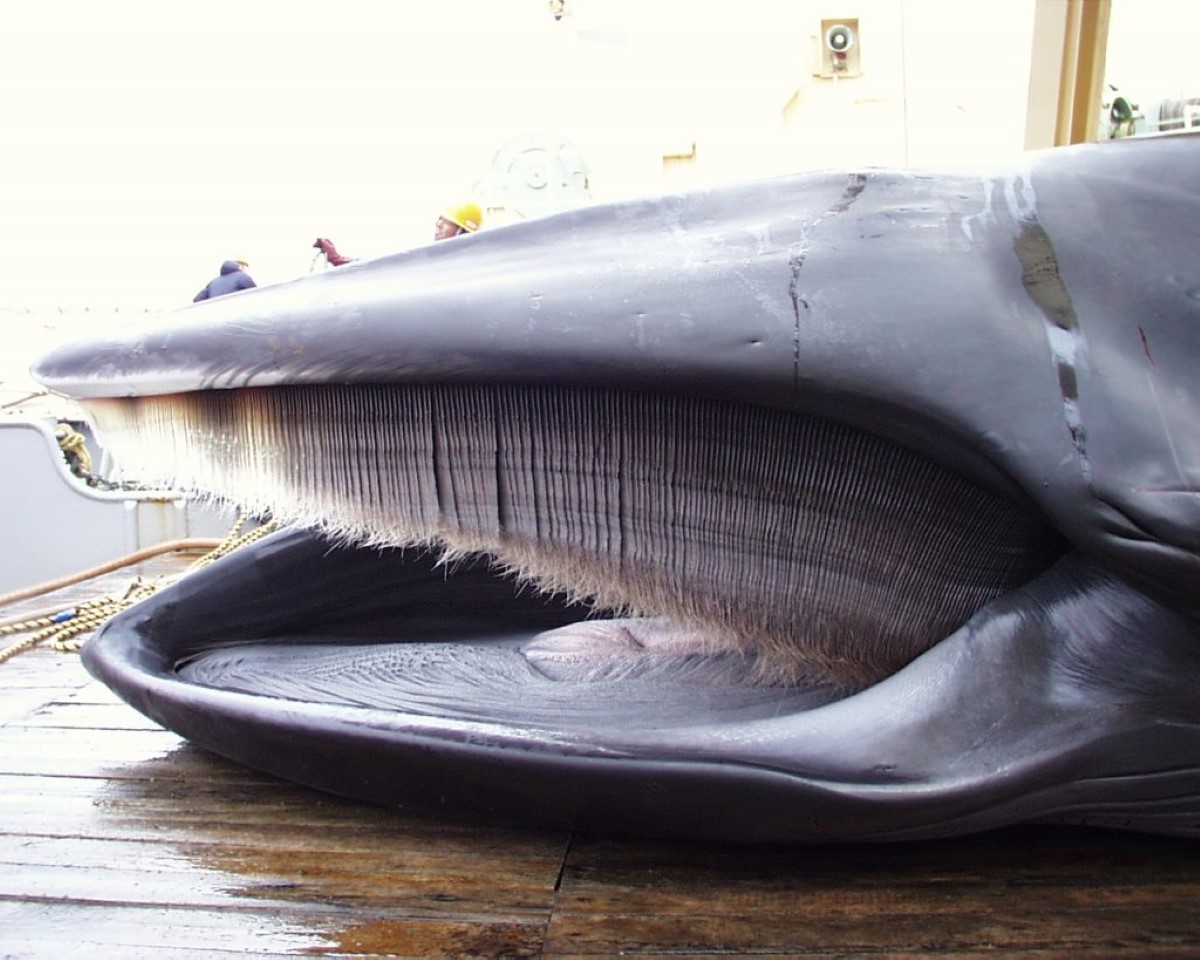 black bone
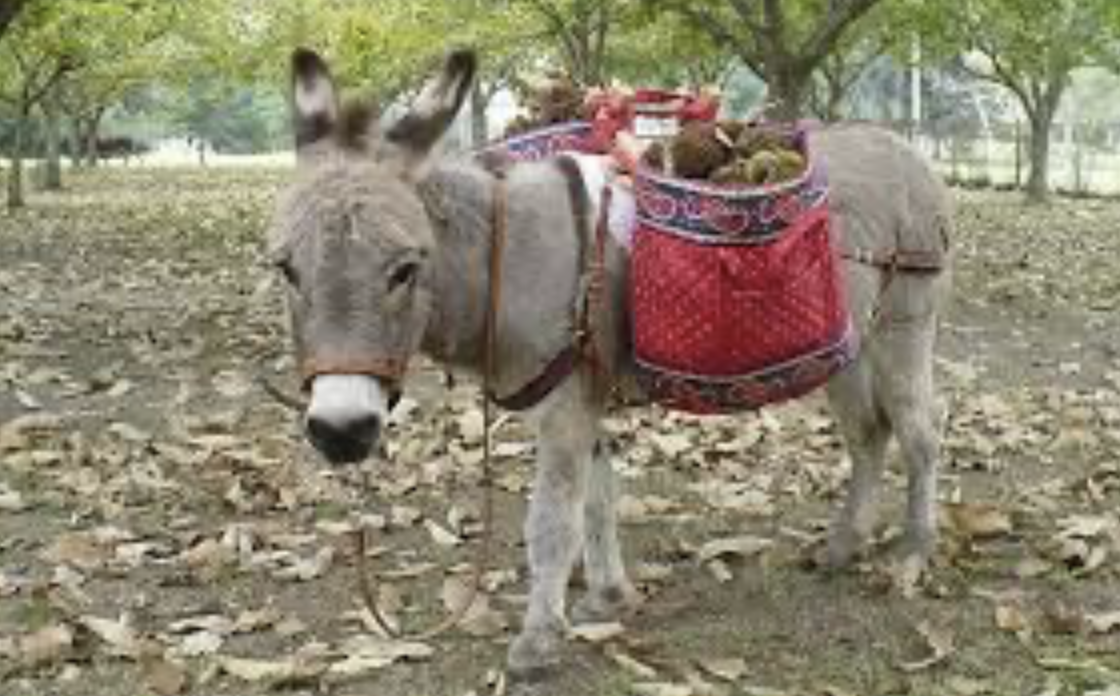 panniers
Meantime, Fedallah was calmly eyeing the right whale’s head, and ever and anon glancing from the deep wrinkles there to the lines in his own hand. And Ahab chanced so to stand, that the Parsee20 occupied his shadow; while, if the Parsee’s shadow was there at all it seemed only to blend with, and lengthen Ahab’s. As the crew toiled on, Laplandish21 speculations were bandied among them, concerning all these passing things.
“The English expression also appeared in the early 17th century. Its original forms were to talk of a cock and a bull, meaning to tell a long rambling, idle story, and a story of a cock and a bull, meaning tedious, disconnected or misleading talk.
It is first attested in The Anatomy of Melancholy. What it is, with all the kinds causes, symptomes, prognostickes, & seuerall cures of it_ (first published in 1621), written by the English scholar Robert Burton (1577-1640) under the pen name of Democritus Junior:
(1628 edition)
Some mens sole delight is, to take Tobacco, & drinke all day long in a Tauerne or Ale-house, to discourse, sing, iest, roare, talke of a Cock and a Bull ouer a pot &c.” https://wordhistories.net/2017/03/08/cock-and-bull/
Bull” vs. “Bullshit”: The term “bull” (meaning nonsense/fraud) is much older, with roots in Middle English and Old French (bole, meaning fraud or deceit). It was later mistakenly, or perhaps directly, associated with the male bovine animal, according to the Language Log.
LOCKE /KANT - more from Melville Electronic Library: Locke’s head … Kant’s: The arguments of English empiricist John Locke 1632-1704, who held that human knowledge is produced by sense experience, were challenged by German idealist Immanuel Kant 1724-1804, for whom knowledge was shaped by innate forms of mind. Ishmael suggests that one is “sorely strained” to reconcile these concepts. At the end of the following chapter, the opposition is changed to Stoicism versus the Platonism of Baruch Spinoza 1632-1677. Melville had read these philosophers and had discussed contemporary philosophy in depth with experts during his 1849–50 tour of England, Germany, and France (see NN Journals).
Table of Contents
FOOTNOTE
Footnotes
-
Brit - as seen in Ch 45 The Affidavit, and Ch 58 Brit, is the yellow plankton-y stuff floating on the water, eaten by Right Whales, etc. ↩
-
Three rods: 18 feet ↩
-
The eager Israelites: in Exodus 17:6, God tells Moses to hit a rock with his staff, and water flows from it for the parched Israelites to drink. Moses did. They drank. ↩
-
Oakum: hemp or jute fiber used for caulking a ship’s seams ↩
-
swap or a bargain: In Christopher Marlowe’s The Tragical History of Dr. Faustus (1604) and Johann von Goethe’s Faust (1808, 1832), Faust obtains occult knowledge at the price of his soul. Stubb is implying that Ahab has made a similar Faustian bargain for the death of Moby Dick. See also “Mephistophelean grin” in Ch. 32. The British edition (see thumbnail) changes “swap” to “swop,” an alternate spelling for this word (OED). NN and MEL follow the spelling conventions of the American edition (such as “honor” rather than “honour”), and the NN edition does not list all instances of this variant category. In its future collations, MEL will list all variants including such spellings. ↩
-
old governor: In this paragraph Stubb parodies the framing narrative of the book of Job, in which God (the old governor at home in his flag-ship heaven) tests Job’s faith by allowing Satan to do anything to afflict but not kill him. See also “Job’s whale” in Ch. 41 ↩
-
Asiatic Cholera: 1817-24 and 1839-1856 (!) - killed millions ↩
-
Three Spaniards: an 1800 book by the popular English novelist George Walker (1772-1847). Stubb is suggesting that Flask has lowbrow taste. ↩
-
Barrel making iron rings to hold staves together ↩
-
The ship is a number 1 and the 0’s (oughts) number the barrel rings in the hold. That’s saying Fedallah’s age is 1,000,000,000+ ↩
-
Orlop: the lowest deck of a ship ↩
-
Double-darbies: handcuffs and ankle chains ↩
-
Docked: having the tail cut off ↩
-
Counterpoise: counterbalancing weight ↩
-
Locke’s: John Locke (1632-1704), an English philosopher who proposed that people were born as a blank slate or tabula rasa, without fixed ideas ↩
-
Kant’s: Immanuel Kant(1724-1804), a German philosopher who held that the world could not be understood without reference to the limits of man’s ability to understand ↩
-
Thunder-heads: the swollen top of a thundercloud, but in this case, the whale heads, or the notions of two competing philosophers ↩
-
Black bone: baleen ↩
-
Panniers: a pair of baskets on either side of a pack animal ↩
-
Parsee: a member of the Zoroastrian sect in India ↩
-
Laplandish: Pertaining to the supernatural. Although the culture of the nomadic Lapps (Sami) of far northern Europe was little-known, they were thought of as extraordinarily superstitious. Now Samiland and Samis. ↩