| PREVIOUS | NEXT |
|---|
Contents
CHAPTER 98. Stowing Down and Clearing Up.
CHAPTER 97. The Lamp.
Had you descended from the Pequod’s try-works to the Pequod’s forecastle, where the off duty watch were sleeping, for one single moment you would have almost thought you were standing in some illuminated shrine of canonized kings and counsellors. There they lay in their triangular oaken vaults, each mariner a chiselled muteness; a score of lamps flashing upon his hooded eyes.
In merchantmen, oil for the sailor is more scarce than the milk of queens. To dress in the dark, and eat in the dark, and stumble in darkness to his pallet, this is his usual lot. But the whaleman, as he seeks the food of light, so he lives in light. He makes his berth an Aladdin’s lamp,1 and lays him down in it; so that in the pitchiest night the ship’s black hull still houses an illumination.
See with what entire freedom the whaleman takes his handful of lamps—often but old bottles and vials, though—to the copper cooler at the try-works, and replenishes them there, as mugs of ale at a vat. He burns, too, the purest of oil, in its unmanufactured, and, therefore, unvitiated2 state; a fluid unknown to solar, lunar, or astral contrivances ashore.3 It is sweet as early grass butter in April. He goes and hunts for his oil, so as to be sure of its freshness and genuineness, even as the traveller on the prairie hunts up his own supper of game.
CHAPTER 98. Stowing Down and Clearing Up.
Already has it been related how the great Leviathan is afar off descried from the mast-head; how he is chased over the watery moors, and slaughtered in the valleys of the deep; how he is then towed alongside and beheaded; and how (on the principle which entitled the headsman of old to the garments in which the beheaded was killed) his great padded surtout4 becomes the property of his executioner; how, in due time, he is condemned to the pots, and, like Shadrach, Meshach, and Abednego,5 his spermaceti, oil, and bone pass unscathed through the fire;—but now it remains to conclude the last chapter of this part of the description by rehearsing—singing, if I may—the romantic proceeding of decanting off his oil into the casks and striking them down into the hold, where once again Leviathan returns to his native profundities, sliding along beneath the surface as before; but, alas! never more to rise and blow.
While still warm, the oil, like hot punch, is received into the six-barrel casks;6 and while, perhaps, the ship is pitching and rolling this way and that in the midnight sea, the enormous casks are slewed round and headed over, end for end, and sometimes perilously scoot across the slippery deck, like so many land slides, till at last man-handled and stayed in their course; and all round the hoops, rap, rap, go as many hammers as can play upon them, for now, ex officio,7 every sailor is a cooper.8
This part of barrel making: https://youtu.be/ipmpakloozk?si=34FZX9RXqK9BnD4T&t=123
At length, when the last pint is casked, and all is cool, then the great hatchways are unsealed, the bowels of the ship are thrown open, and down go the casks9 to their final rest in the sea. This done, the hatches are replaced, and hermetically closed, like a closet walled up.
In the sperm fishery, this is perhaps one of the most remarkable incidents in all the business of whaling. One day the planks stream with freshets of blood and oil; on the sacred quarter-deck enormous masses of the whale’s head are profanely piled; great rusty casks lie about, as in a brewery yard; the smoke from the try-works has besooted all the bulwarks; the mariners go about suffused with unctuousness; the entire ship seems great Leviathan himself; while on all hands the din is deafening.
But a day or two after, you look about you, and prick your ears in this self-same ship; and were it not for the tell-tale boats and try-works, you would all but swear you trod some silent merchant vessel, with a most scrupulously neat commander. The unmanufactured sperm oil possesses a singularly cleansing virtue. This is the reason why the decks never look so white as just after what they call an affair of oil. Besides, from the ashes of the burned scraps of the whale, a potent ley10 is readily made; and whenever any adhesiveness from the back of the whale remains clinging to the side, that ley quickly exterminates it. Hands go diligently along the bulwarks, and with buckets of water and rags restore them to their full tidiness. The soot is brushed from the lower rigging. All the numerous implements which have been in use are likewise faithfully cleansed and put away. The great hatch is scrubbed and placed upon the try-works, completely hiding the pots; every cask is out of sight; all tackles are coiled in unseen nooks; and when by the combined and simultaneous industry of almost the entire ship’s company, the whole of this conscientious duty is at last concluded, then the crew themselves proceed to their own ablutions; shift themselves from top to toe; and finally issue to the immaculate deck, fresh and all aglow, as bridegrooms new-leaped from out the daintiest Holland.11
Now, with elated step, they pace the planks in twos and threes, and humorously discourse of parlors, sofas, carpets, and fine cambrics; propose to mat the deck; think of having hangings to the top; object not to taking tea by moonlight on the piazza of the forecastle. To hint to such musked mariners of oil, and bone, and blubber, were little short of audacity. They know not the thing you distantly allude to. Away, and bring us napkins!
But mark: aloft there, at the three mast heads, stand three men intent on spying out more whales, which, if caught, infallibly will again soil the old oaken furniture, and drop at least one small grease-spot somewhere. Yes; and many is the time, when, after the severest uninterrupted labors, which know no night; continuing straight through for ninety-six hours; when from the boat, where they have swelled their wrists with all day rowing on the Line,—they only step to the deck to carry vast chains, and heave the heavy windlass, and cut and slash, yea, and in their very sweatings to be smoked and burned anew by the combined fires of the equatorial sun and the equatorial try-works; when, on the heel of all this, they have finally bestirred themselves to cleanse the ship, and make a spotless dairy room of it; many is the time the poor fellows, just buttoning the necks of their clean frocks, are startled by the cry of “There she blows!” and away they fly to fight another whale, and go through the whole weary thing again. Oh! my friends, but this is man-killing! Yet this is life. For hardly have we mortals by long toilings extracted from the world’s vast bulk its small but valuable sperm; and then, with weary patience, cleansed ourselves from its defilements, and learned to live here in clean tabernacles of the soul;12 hardly is this done, when—There she blows!—the ghost is spouted up, and away we sail to fight some other world, and go through young life’s old routine again.
Oh! the metempsychosis! Oh! Pythagoras,13 that in bright Greece, two thousand years ago, did die, so good, so wise, so mild; I sailed with thee along the Peruvian coast last voyage—and, foolish as I am, taught thee, a green simple boy, how to splice a rope!
Notes that are not footnotes ;)
Lamp Notes
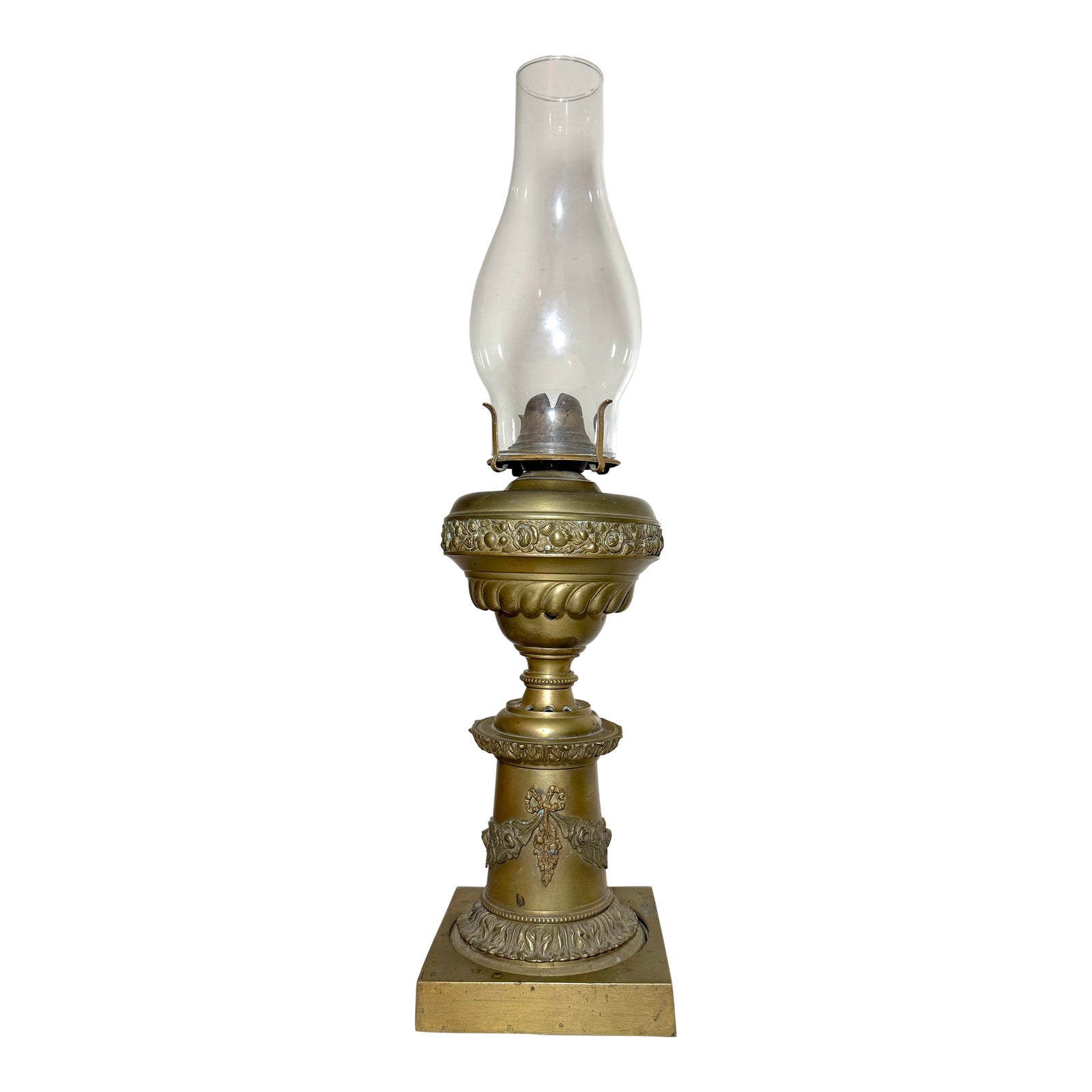
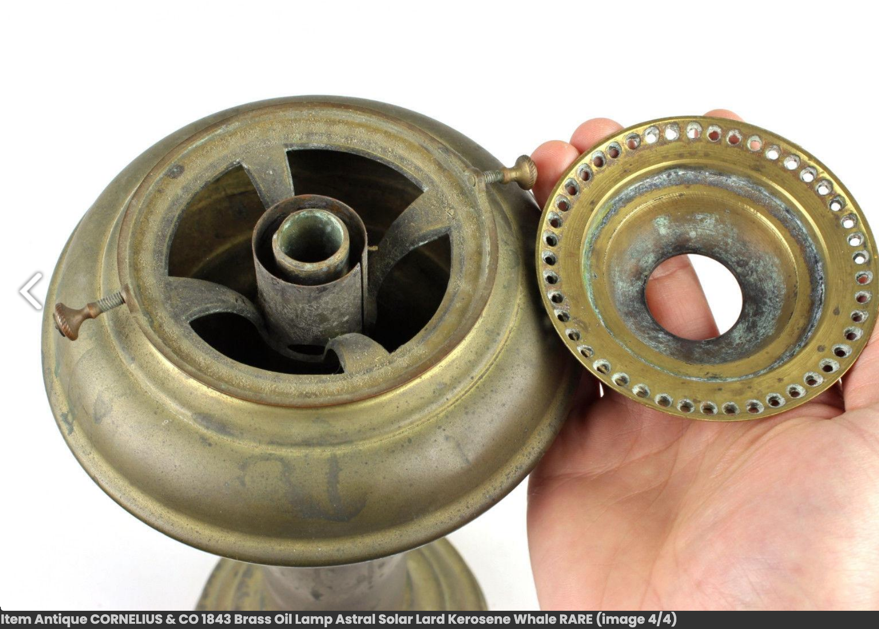
Solar, lunar, and astral lamps were all real, named categories of early 19th-century oil lamps, all descended from the 1780s Argand burner (the first lamp design with a hollow cylindrical wick that let air reach the flame for a brighter, steadier burn). By the time Melville was writing in 1851, “astral” and “solar” in particular were common household names — the kind of thing his readers would recognize instantly, the way we’d recognize “LED” vs. “halogen” today:
- Astral lamps — tall, single-reservoir lamps with a central oil font, generally burning the more expensive fuels (whale oil, colza/rapeseed oil). These lamps were made in both France and England shortly after Argand’s invention, and were among the earliest and most expensive of the Argand-derived designs. Blogger
- Solar lamps — introduced in the 1840s as a cheaper alternative, fueled with lard oil rather than costlier whale oil, distinguished by an inverted pear-shaped font below the burner. This is the detail that makes Melville’s line sharper than it looks: he’s needling the cheap landlocked lamp by name. Blogger
- “Lunar” is the softer, dimmer step below solar/astral in the naming convention of the era — lamp makers regularly used celestial names (solar, lunar, astral) to market brightness tiers, the way paint or fabric lines get evocative names today.
So when Ishmael says the whaleman burns oil “unknown to solar, lunar, or astral contrivances ashore,” he’s not being poetically vague — he’s naming three specific, purchasable commercial lamp products and saying whale oil, straight from the source, beats all of them. It’s a very concrete brag dressed up as a lyrical one.
Sources you can cite on air or in show notes:
- Antique Lamp Supply, “Identifying 19th Century Lamps”
- “Nineteenth-Century American Furniture and Other Decorative Arts, 1830–1914: Lighting” — this one’s the best single source; it’s specifically about the same window Melville was writing in
ASTRAL LAMPS:


SOLAR LARD Lamp
Results from the web(opens in new tab)
Six-Barrel Casks
The standard unit of measure in whaling was the barrel, which contained 31½ gallons. So a “six-barrel cask” holds 6 × 31.5 = 189 gallons. New Bedford Whaling Museum
What that means in modern terms:
- ~189 gallons / ~715 liters
- That’s roughly 3.4 standard modern 55-gallon oil drums — the kind you’d picture at a gas station or shipping yard — combined into one container
- Or about 12 full car gas tanks poured into a single cask
- Or 3–4 bathtubs full, if you want a really visceral image for listeners
Weight is the more dramatic number, though. Whale oil is a bit lighter than water — roughly 7.5 lbs per gallon — so a full six-barrel cask weighs somewhere around 1,400 lbs (about 640 kg / nearly two-thirds of a metric ton), not counting the weight of the wooden cask itself. That’s the detail that actually explains the passage: Melville isn’t exaggerating when he calls these things “enormous” and describes them “perilously scoot[ing] across the slippery deck” and needing to be “man-handled” by the crew on a pitching ship. A three-quarters-ton, half-liquid, half-empty barrel sliding loose on a wet deck in a rolling sea is a genuine crush hazard — this is why the passage reads almost like a workplace-safety warning dressed up as lyrical prose.
Source: New Bedford Whaling Museum, “Whales and Hunting” —. New Bedford Whaling Museum
FOOTNOTES
Footnotes
-
Aladdin’s lamp: The magic lamp from the story of Aladdin in One Thousand and One Nights — rubbed to summon a genie who grants wishes. The comparison is precise and generous: the whaleman’s berth, flooded with whale-oil lamplight, is a lamp of infinite wish-fulfillment. Every other sailor at sea lives in darkness; the whaleman lives in the product of his own labor, self-illuminated. Ch. 97 is three paragraphs long but carries real structural weight as the tonal answer to Ch. 96’s hellfire try-works: descend from that infernal darkness and find the forecastle glowing like a shrine. ↩
-
unvitiated = pure and uncorrupted ↩
-
A fluid unknown to solar, lunar, or astral contrivances ashore: In the 1840s–50s, the main artificial lighting options ashore were tallow candles, lard oil, camphene (a highly flammable turpentine distillate), and coal gas for urban lamps. Spermaceti oil burned cleaner, brighter, and with less odor than any of them — it was the premium illuminant of the era, preferred for lighthouse lenses and precision optical instruments. “Solar,” “lunar,” and “astral” were trade names for various improved oil-burning lamp designs of the period. The whaleman bypasses all of them: he goes straight to the source. ↩
-
surtout = big overcoat, frock-coat like ↩
-
Shadrach, Meshach, and Abednego: Daniel 3 — the three young men thrown into Nebuchadnezzar’s fiery furnace for refusing to worship his golden idol, who emerge completely unscathed, with not even the smell of fire on them. Melville applies it with characteristic double meaning: the whale’s oil, bone, and spermaceti pass through the try-works fire and emerge transformed, not destroyed — rendered into something pure and useful. The biblical trio survived through divine protection; the whale’s substances survive through chemistry. One transformation is a miracle; the other is commerce. Melville notes the parallel without resolving it. ↩
-
The standard unit of measure in whaling was the barrel, which contained 31½ gallons. So a “six-barrel cask” holds 6 × 31.5 = 189 gallons. New Bedford Whaling Museum ↩
-
Ex officio: Latin, “by virtue of one’s office” — by reason of the position one holds rather than by specific appointment. When the oil is ready to cask, every man on the ship becomes a cooper by default, regardless of his normal duties. The Latin gives it mock-official weight that suits Melville’s comic register at this point in the chapter. ↩
-
Cooper: A barrel-maker — one of the most skilled and essential trades on a whaling voyage. Barrels had to be tight enough to hold oil without leaking yet flexible enough to survive the ship’s constant motion. A dedicated ship’s cooper was standard on most whalers, but when thousands of gallons of oil needed casking at once, the whole crew turned coopers. The craft was ancient and highly specialized; a leaky barrel at sea meant lost oil and lost profit—not to mention lack of drinking water. https://youtu.be/w3n3qP8RItY?si=5XU3DXsaaM6KCvOL ↩
-
Ummm… go down HOW? He doesn’t say. I’m still looking ;) ↩
-
A potent ley: Lye — a strongly alkaline solution made by leaching water through wood ash. The ashes of rendered whale blubber (“fritters”) were rich in potassium carbonate, producing a caustic cleaning agent that dissolved grease and organic matter with remarkable efficiency. It is essentially the same chemistry as soap-making: fat plus alkali equals cleaning agent. The whale, in its final form as burned ash dissolved in water, cleans the very ship that burned it. Melville doesn’t comment on this — he doesn’t need to. ↩
-
Bridegrooms new-leaped from out the daintiest Holland: Holland cloth — fine, tightly woven, bleached linen fabric for which the Dutch were famous, used for the best shirts and bedlinen. I believe Holland was also the fabric named by Jane Eyre as what their school aprons were made of. The image is of the crew emerging from their scrubbing as fresh and pristine as men dressed in finest linen for a wedding — at precisely the moment the masthead lookout spots another whale and the whole brutal cycle begins again. The comedy and the exhaustion are simultaneous. ↩
-
Clean tabernacles of the soul / the ghost is spouted up: Ishmael’s closing lines echo John 17:3 — Jesus’s prayer before his betrayal: “And this is life eternal, that they might know thee the only true God.” Ishmael’s “Yet this is life” directly echoes “this is life eternal” — but strips out the eternal and the salvation. There is no resurrection here; there is only the next whale. “The ghost is spouted up” uses the whaleman’s term for the whale’s blow while invoking the Holy Ghost. The language is reverent; the meaning is exhausted repetition. Melville is doing what he always does: speaking scripture and meaning something harder. ↩
-
Metempsychosis / Pythagoras: Pythagoras (c. 570–495 BCE) — the Greek philosopher and mathematician, best known for the theorem bearing his name, was also the major ancient Greek proponent of metempsychosis: the transmigration of souls, the doctrine that the soul passes from body to body after death, cycling through human, animal, and other forms across successive lives. (Essentially the same doctrine as the Hindu concept of samsara.) The closing joke of Ch. 98 is that Ishmael has already sailed with the reincarnated Pythagoras along the Peruvian coast — where the ancient philosopher came back as a green young sailor who had to be taught to splice a rope. The cycle of brutal labor, cleansing, and beginning again (metempsychosis as whaling) is the chapter’s final image: endless return, the soul perpetually arriving as a novice in a new body, having forgotten everything, having to learn it all over again. It is funny and it is not funny at all. ↩